
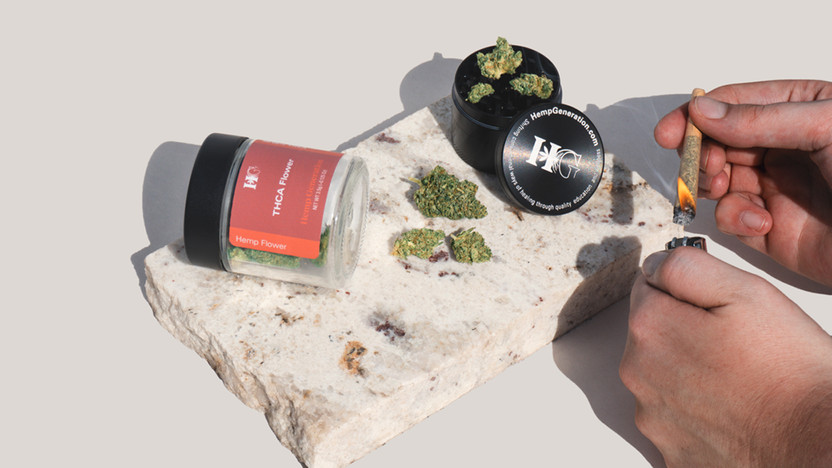
Does THCA Turn Into Delta-9 When Smoked?
10th Sep 2024
THCA (tetrahydrocannabinolic acid) is a naturally occurring cannabinoid found in raw cannabis and hemp plants. In its unheated form, THCA is non-intoxicating and is often discussed in cannabinoid science for its role as a precursor compound.
A common question in hemp education is whether THCA changes when exposed to heat during use.
What Happens When THCA Is Heated?
When THCA is exposed to heat through processes such as smoking, vaporization, or cooking, it undergoes a chemical reaction known as decarboxylation.
During this process:
- THCA loses a carboxyl group
- The molecular structure changes
- It converts into Delta-9 THC
This transformation is a well-documented part of cannabinoid chemistry and is influenced by temperature and duration of heat exposure.
Understanding Decarboxylation
Decarboxylation is a heat-driven chemical process that occurs when cannabinoids are exposed to sufficient temperatures.
In general:
- Heat initiates molecular conversion
- THCA transitions into Delta-9 THC
- The rate of conversion depends on temperature and exposure time
This process is widely studied in hemp and cannabis science and is relevant to how cannabinoid profiles change when plant material is heated.
How Heat Impacts Cannabinoid Conversion
When hemp or cannabis flower is exposed to heat, THCA begins converting into Delta-9 THC at varying rates depending on:
- Temperature level
- Method of heat application
- Duration of exposure
- Product composition and moisture content
Different consumption or preparation methods may result in different levels of cannabinoid transformation.
Other Ways THCA Converts to Delta-9 THC
Smoking is not the only method that converts THCA into Delta-9 THC. Vaporizing, baking, and other heat-based methods also cause decarboxylation. In these processes, the heat gradually converts THCA, although the temperatures and timing vary.
For those who prefer not to smoke, edibles or vaporizing offer an alternative way to experience THC's effects. In edibles, cannabis is heated during the cooking process, which activates the THC before consumption.
Why THCA and Delta-9 Matter
Understanding the relationship between THCA and Delta-9 THC helps consumers better interpret cannabinoid science and product labeling. THCA is a naturally occurring cannabinoid found in raw hemp and cannabis plants, while Delta-9 THC is the compound formed when THCA is exposed to heat through decarboxylation.
This conversion process is an important concept in cannabinoid chemistry because it explains how plant compounds change when heated during various forms of product preparation or use.
For consumers reviewing hemp-derived products, this distinction is often relevant when evaluating:
- Cannabinoid content on lab reports
- Product labeling and formulation details
- How cannabinoids change under heat exposure
How THCA Flower Differs from Other Hemp Products
THCA-rich hemp flower is one of several cannabinoid product categories available in the hemp industry. It is often discussed alongside other hemp-derived options such as CBD oil or edibles.
Unlike CBD-focused products, which maintain their cannabinoid profile through heating or processing, THCA is a precursor cannabinoid that changes when exposed to heat. This transformation is a key topic in hemp education and cannabinoid science.
Consumers commonly compare product types based on:
- Cannabinoid composition
- Intended use format (flower, oil, edible, etc.)
- Lab-tested cannabinoid profiles
- Product sourcing and cultivation methods
Hemp Generation: Quality THCA Flower for Your Personal Needs
Hemp Generation offers premium THCA flower carefully cultivated to deliver the benefits of natural cannabis. When smoked or vaporized, the THCA naturally converts into Delta-9 THC, offering a trusted, quality experience. Explore our selection of THCA flower for a balanced and reliable choice.