
Sustainable Practices in the Hemp Industry: Exploring Hemp Sustainability Benefits and Eco-Friendly Cultivation
12th May 2026
The hemp industry is rapidly gaining recognition for its potential to promote sustainable practices that benefit both the environment and the economy. As a crop, hemp is uniquely positioned to address modern ecological challenges, from climate change to resource depletion.
This article delves into the various sustainable practices in hemp cultivation, highlighting the environmental advantages and eco-friendly methods that make hemp a valuable crop for the 21st century. Readers will learn about carbon sequestration, water efficiency, and the innovative organic farming methods that define the industry.
As the demand for sustainable products grows, understanding the role of hemp in promoting ecological balance becomes increasingly important. We will explore the principles of regenerative agriculture and how companies like Hemp Generation are setting a standard for a greener, more ethical future.
Key Takeaway
- Carbon Champion: Hemp can sequester up to 15 tons of CO2 per hectare, making it more efficient at carbon capture than many forests.
- Water Conservation: Industrial hemp requires approximately 50% less water than cotton and can often thrive on rainfall alone.
- Soil Health: With deep taproots that reach up to 1.5 meters, hemp aerates soil, prevents erosion, and removes heavy metals.
- Zero Waste Potential: Every part of the hemp plant - from the stalk to the seed - can be utilized, supporting a truly circular economy.
- Biodiversity Support Hemp provides a vital late-season pollen source for bees and other pollinators when other crops have finished flowering.
What Are the Key Environmental Benefits of Hemp Cultivation?
Hemp cultivation offers a suite of environmental benefits that contribute to sustainable agriculture. Unlike traditional industrial crops, hemp acts as a “cleansing” plant for the earth, simultaneously restoring the atmosphere and the ground.
These advantages include rapid carbon sequestration, significant water efficiency, and the natural suppression of weeds without the need for toxic herbicides. By integrating hemp into modern farming, we can create a more resilient agricultural system.
Furthermore, hemp's versatility allows it to replace less sustainable materials like plastic, concrete, and wood pulp. By shifting production toward hemp-based alternatives, we can mitigate deforestation and reduce the global carbon footprint of multiple industries.
How Does Hemp Act as a Powerful Carbon Sink?
Hemp is widely recognized as a “carbon sequestering powerhouse”. Through the natural process of photosynthesis, hemp captures atmospheric carbon dioxide and stores it permanently within its high-cellulose biomass and deep root systems.
Research updated for 2025 indicates that hemp can absorb between 8 and 22 tons of CO2 per hectare annually, depending on the climate and variety. This rate exceeds that of most young forests, largely because hemp reaches its full height of 4 meters in just 100 days.
|
Crop / Forest Type |
CO2 Sequestration (Tons/Hectare/Year) |
Growth Cycle |
|
Industrial Hemp |
8 - 22 Tons |
~100 Days |
|
Managed Forest |
2 - 6 Tons |
Decades |
|
Cotton |
~1.5 Tons |
150 - 180 Days |
This rapid growth allows for multiple harvests per year in certain regions, effectively doubling the carbon capture potential of a single piece of land. When hemp is used in long-term products like “hempcrete,” that carbon remains locked away for the life of the building.
Why Is Hemp Water-Efficient Compared to Traditional Crops?
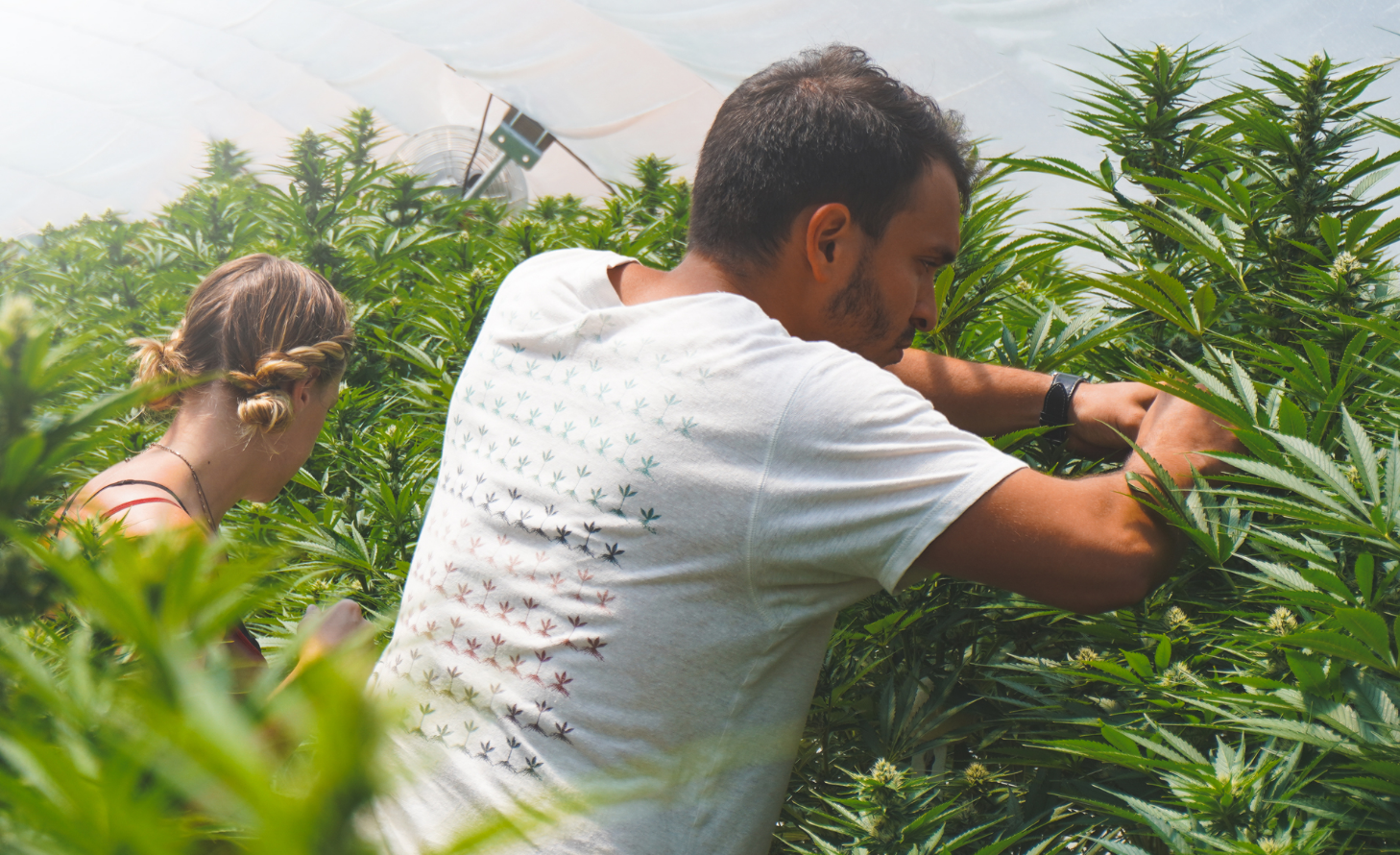
In an era of increasing water scarcity, hemp stands out as a drought-tolerant alternative to “thirsty” crops. While cotton can require up to 10,000 liters of water to produce one kilogram of fiber, hemp typically requires less than 3,000 liters.
This efficiency is due to hemp's deep taproot system, which allows the plant to access moisture deep in the subsoil that other plants cannot reach. In many climates, hemp can grow successfully using only natural rainfall, eliminating the need for energy-intensive irrigation systems.
Reducing irrigation not only conserves a precious resource but also prevents the runoff of fertilizers into local waterways. By choosing hemp, we support a farming model that respects the natural water cycle of the local environment.
How Do Organic Hemp Farming Methods Support Soil Health?
Organic hemp farming goes beyond the simple avoidance of chemicals; it is a holistic approach to land management. By prioritizing biological processes over synthetic inputs, organic farmers foster a living ecosystem within the soil.
Hemp is a natural “bio-accumulator,” meaning it can pull heavy metals and toxins out of the soil - a process known as phytoremediation. Organic practices ensure that the plant is not adding new toxins while it cleanses the old ones.
Furthermore, hemp's dense leaf canopy creates a natural “mulch” that prevents moisture from evaporating and suppresses the growth of weeds. This eliminates the need for chemical herbicides, protecting the health of the soil microbes and the farmers who work the land.
Regenerative Hemp Agriculture and the Circular Economy
Regenerative agriculture is the next evolution of sustainability. While organic farming aims to “do no harm”, regenerative practices aim to “actively restore” the environment. This includes "no-till" planting, which keeps carbon trapped in the soil rather than releasing it into the air.
Hemp is the ideal candidate for a circular economy because almost 100% of the plant is usable:
- Seeds: Used for high-protein food and nutrient-rich oils.
- Fibers: Processed into durable textiles, paper, and bioplastics.
- Hurds (Stalk Core): Mixed with lime to create carbon-negative building materials.
- Roots: Can be used in traditional medicine or left to decompose, adding organic matter back to the soil.
By utilizing the entire plant, the hemp industry minimizes waste and reduces the demand for non-renewable, fossil-fuel-based resources.
How Hemp Generation Ensures Quality and Sustainability
Hemp Generation is committed to a "Soil-to-Shelf" philosophy that prioritizes both the planet and the consumer. We believe that a product's quality is inextricably linked to the health of the land on which it was grown.
Every product we offer - from our sustainably grown THCA flower to our full range of hemp products - is backed by Third-Party Lab Testing. This doesn't just verify potency; it confirms that our hemp is free from heavy metals and pesticides, proving that our sustainable farming practices are working.
For businesses and retailers, we also offer bulk THCA flower and wholesale options for those looking to stock sustainably sourced hemp at scale.
Frequently Asked Questions
Is hemp truly carbon negative?
Yes. Studies suggest that hemp captures more CO2 during its growth than is emitted during its harvesting and processing combined, especially when used for building materials or biochar.
Can hemp replace plastic?
Absolutely. Hemp cellulose can be used to create bioplastics that are 100% biodegradable. Unlike petroleum-based plastics that last for centuries, hemp plastic can decompose in a matter of months.
Why is hemp better for the soil than corn or soy?
Hemp has much deeper roots than corn or soy, which helps break up compacted soil and prevents erosion. It also requires fewer chemical inputs, allowing the soil's natural microbiome to flourish.
Does hemp help the bee population?
Yes. Hemp is wind-pollinated, and its flowers produce a massive amount of pollen in the late summer (July to September). This is a critical time when many other flowers have died off, providing a "starvation-period" food source for bees.